Timber is one of the best natural insulators used in construction - around 400 times more thermally resistant than steel and far better than aluminium. Combined with modern glazing, a well-made timber window comfortably reaches the top of the Window Energy Rating scale.
Where the heat is lost
A window loses heat three ways: through the glass, through the frame, and through air leakage around the opening sashes. A-rated performance means addressing all three at once.
- Warm-edge spacer bars reduce conduction at the edge of the glazed unit
- Low-emissivity coatings reflect radiant heat back into the room
- Argon gas fill slows convection inside the sealed unit
- Full-perimeter weather seals stop draughts around the sash
Double or triple glazing?
Our standard double glazing achieves U-values from 1.2 W/m²K - already A-rated. Triple glazing pushes this to around 0.7 W/m²K, worthwhile on exposed elevations or for the lowest possible heating bills, though the marginal gain over good double glazing is smaller than many expect.
Why the frame matters
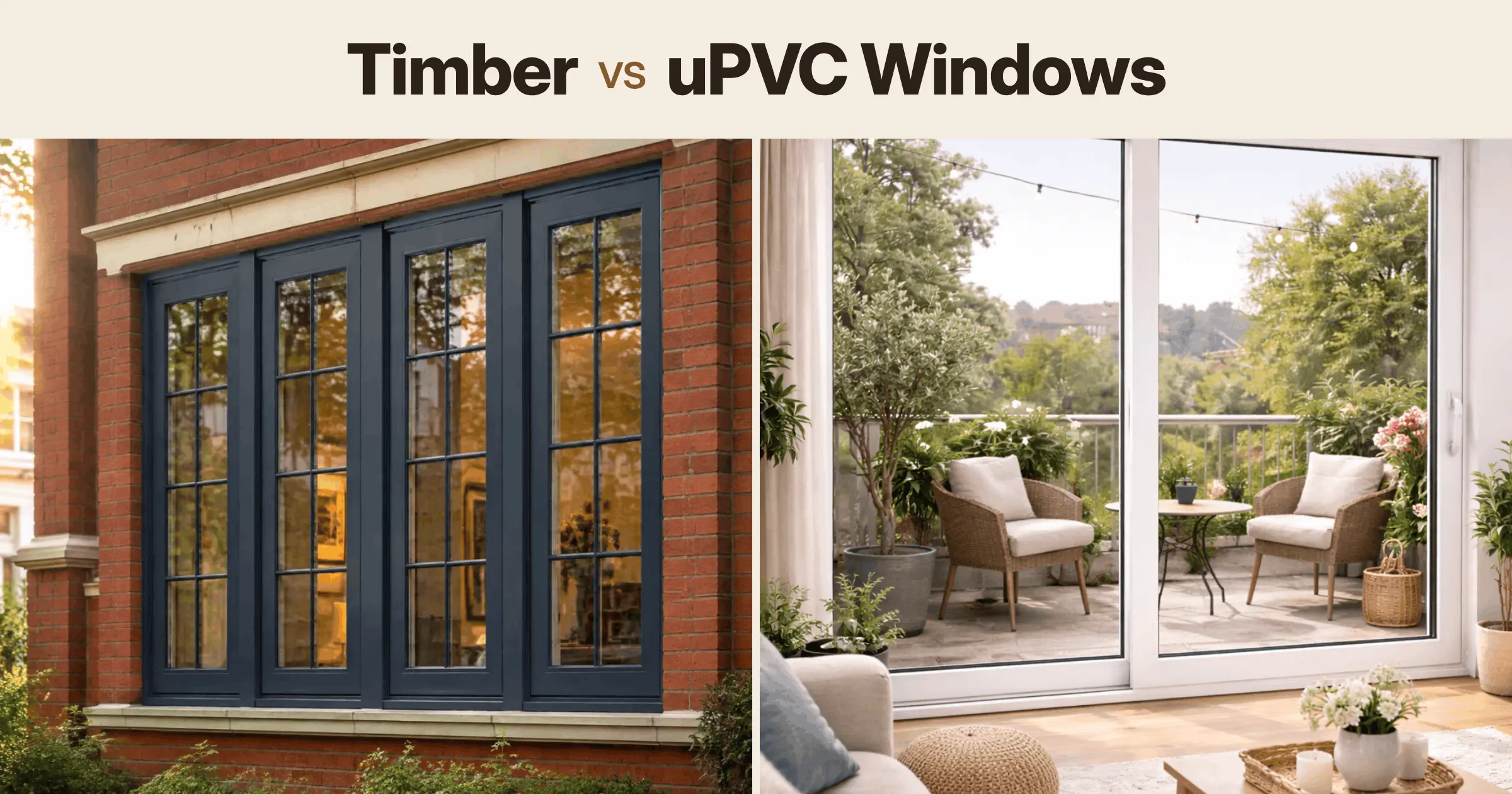
A slim uPVC frame often hides bulky reinforcement and multiple hollow chambers. A solid engineered-timber frame insulates naturally, holds its shape, and lets us keep sightlines slim without sacrificing strength. The result is a window that looks period-correct and performs to a modern standard.