If you are replacing windows in a London home, you have probably had the same conversation twice already: one company tells you uPVC is cheaper and maintenance-free, another tells you timber is the only proper choice. Both are partly right, and that is what makes the decision confusing.
This guide compares timber vs uPVC windows honestly, using UK regulations and independent research rather than sales talk. We make and fit bespoke timber windows in our own Harrow joinery, so we have a view. But we will also tell you when uPVC genuinely makes more sense.
Timber or uPVC: the short answer
Timber windows are the better long-term choice for period homes, conservation areas and anyone staying in their property for many years, because they last around twice as long as uPVC, can be repaired, and are usually required by planners in protected areas. uPVC is cheaper upfront and needs less maintenance, so it suits tight budgets, modern homes and shorter ownership.
What is the difference between timber and uPVC windows?
A timber window has a frame made from wood. Modern timber windows are typically made from engineered (laminated) softwood or hardwood, factory-finished with paint or stain, and fitted with double-glazed units.
A uPVC window has a frame made from unplasticised polyvinyl chloride, a rigid plastic. The frame is extruded as hollow, multi-chambered profiles, often reinforced with steel, and fitted with double or triple glazing.
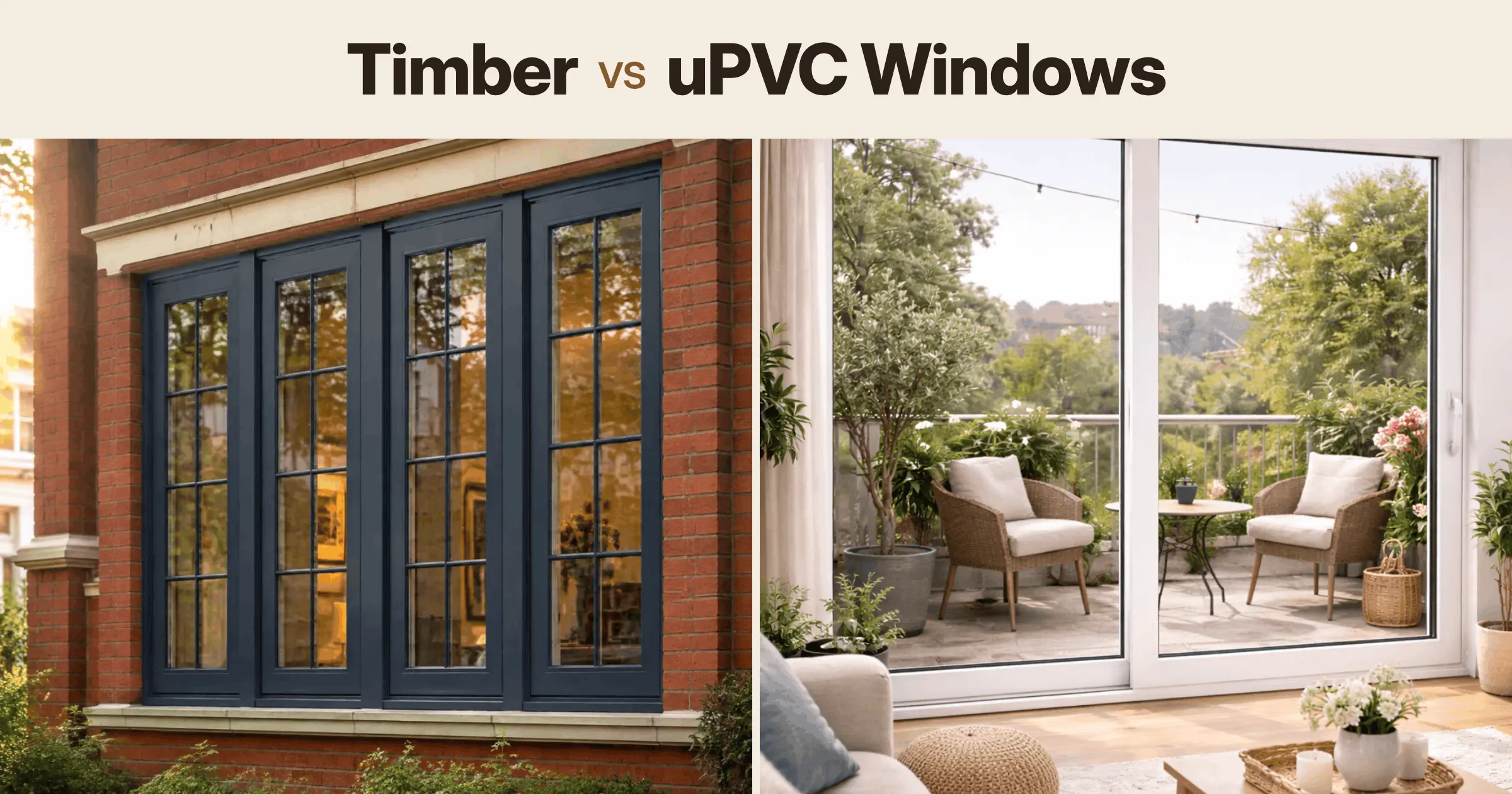
Both can be made as casement windows, sash windows and other styles. The difference shows in appearance, lifespan, repairability and planning acceptance.
Timber vs uPVC windows: side-by-side comparison
| Factor | Timber windows | uPVC windows |
|---|---|---|
| Upfront cost | Higher | Lower |
| Expected frame lifespan | Around 60 years (factory-finished, maintained) | Roughly half that of timber |
| Energy efficiency | Meets Part L with double glazing | Meets Part L with double glazing |
| Maintenance | Re-coat roughly every 8 years | Wipe clean; little else |
| Repairable? | Yes, sections can be spliced or replaced | Limited; often full replacement |
| Appearance | Authentic, fine sightlines, period detailing | Thicker profiles, plastic finish |
| Conservation areas and listed buildings | Usually accepted | Often refused |
| Colour changes | Can be repainted any colour | Limited; foils or sprays only |
| Environmental impact | Renewable, stores carbon | Fossil-fuel based plastic |
Which is more energy efficient?
This is where most sales claims go wrong. Energy efficiency is largely decided by the glazing unit, not the frame material. The Wood Window Alliance's briefing with WWF states plainly that there is no difference in energy efficiency between new uPVC and wood windows, because both come with double or triple glazing as standard.
What matters legally is the whole-window U-value. Under Approved Document L, a replacement window in an existing home in England must achieve a U-value of 1.4 W/m²K or better, or a Window Energy Rating of band B. Both timber and uPVC windows can meet this.
The Energy Saving Trust estimates that replacing all the single glazing in a semi-detached home with A-rated double glazing saves around £85 a year in Great Britain. That saving comes from the glass, so it applies whichever frame you choose.
Bottom line: do not choose uPVC because you think it is "warmer", and do not choose timber for that reason either. Ask any supplier for the whole-window U-value in writing.
Which lasts longer?
Timber does, by a clear margin. Research by Heriot-Watt University for the Wood Window Alliance found that a factory-finished wood frame can be expected to last around 60 years, roughly twice as long as a uPVC frame.
The Energy Saving Trust agrees on direction, noting that wooden frames can last far longer than uPVC frames when maintained.
Look around any London street and you will see the proof: original Victorian and Edwardian timber sashes, well over 100 years old, still working. Plastic windows fitted in the 1990s are already being ripped out.
The key difference is repairability. If a timber sill rots or a sash is damaged, a joiner can cut out and splice in new wood. If a uPVC frame cracks, warps or discolours, the whole window usually has to go.
Which costs less over time?
uPVC is cheaper to buy. Even the Energy Saving Trust notes that PVC windows tend to be cheaper, while hardwood frames are the most expensive.
But the purchase price is only half the story. Because timber lasts around twice as long, you may buy uPVC windows twice in the time you would buy timber once. A study by Imperial College London for the Wood Window Alliance found that, over 60 years and beyond, timber windows cost 2% to 7% less in whole-life terms than comparable uPVC windows, even after maintenance.
So the honest answer is:
- Staying five to ten years? uPVC is usually cheaper for you.
- Staying long term, or adding value to a period property? Timber usually works out better.
How much maintenance do they need?
uPVC needs very little: wipe the frames, clean the drainage slots and lubricate hinges and locks. You cannot repaint it easily, so faded or yellowed frames stay that way.
Timber needs a bit more. Modern factory-finished timber windows need re-coating roughly every eight years with light preparation, according to the Wood Window Alliance. That is a far cry from the constant scraping and painting old single-glazed sashes needed.
All windows, timber or uPVC, benefit from a six-monthly wash down and a drop of oil on the ironmongery.
Can I fit uPVC windows in a conservation area or listed building?
Often, no. This is the single biggest reason London homeowners choose timber.
According to the Planning Portal, you do not usually need planning permission to replace windows with ones of similar appearance. However:
- Article 4 Directions can remove these permitted development rights, so you need planning permission even for like-for-like replacements. Many London conservation areas have them.
- Listed buildings need listed building consent for significant works, including window changes.
- Flats and leasehold properties may need permission from the freeholder or management company.
- Conservation areas may have extra restrictions, so check with your council first.
In practice, many London boroughs treat uPVC as unacceptable in conservation areas because it does not match the original timber profiles, joints and sightlines. Historic England's guidance on traditional windows sets out how historic windows should be repaired, upgraded or, where justified, replaced to match.
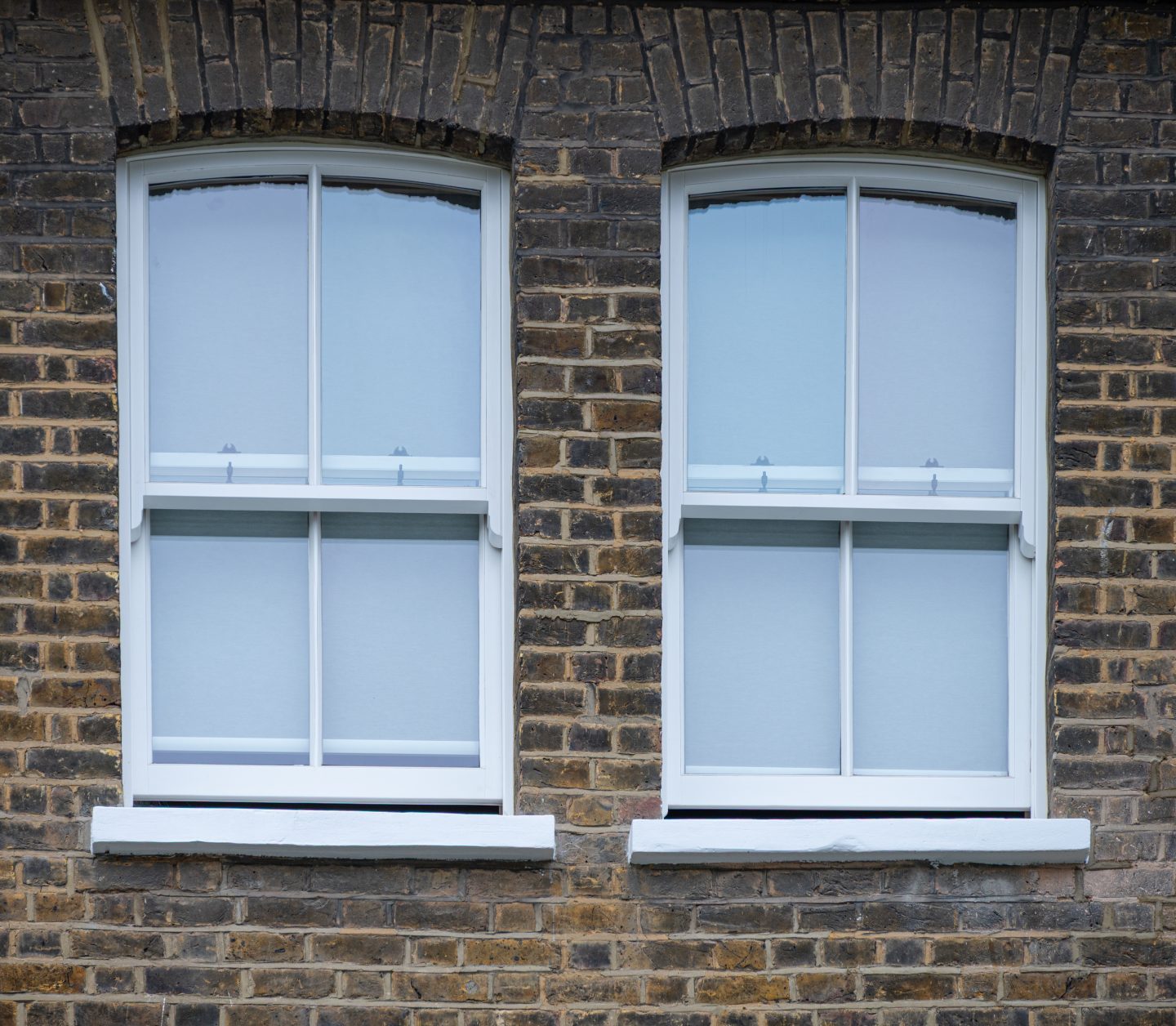
If your home is Victorian, Edwardian or Georgian, or sits in a conservation area, timber is usually the only material your conservation officer will support. Our sash windows and flush casement windows are made to heritage-friendly profiles for exactly this reason.
Which is better for the environment?
Timber, when it comes from well-managed forests. Wood is renewable and stores carbon, while uPVC is made from fossil fuels.
Heriot-Watt research for the Wood Window Alliance found that each wood window used instead of a uPVC window saves an estimated 160kg of CO2e over its lifetime. The Energy Saving Trust also describes wooden frames as the more sustainable option.
To be fair to uPVC, it can be recycled, and recycling rates have improved. But a timber window that lasts twice as long, and can be repaired rather than scrapped, has a clear head start.
When uPVC is the sensible choice
We make timber windows, but we will not pretend they suit everyone. uPVC makes sense when:
- your budget is fixed and upfront cost matters most
- you plan to sell within a few years
- the property is a modern home with no planning restrictions
- it is a rental where minimal maintenance is the priority
- appearance and period character are not important to you
When timber is the better choice
Timber is the stronger choice when:
- your home is period (Georgian, Victorian, Edwardian or 1930s)
- you are in a conservation area, Article 4 area or listed building
- you plan to stay for many years
- you want authentic detailing: slim glazing bars, sash horns, run-through sashes
- you want windows you can repaint in any colour and repair rather than replace
- sustainability matters to you
A situation we see often in north-west London
A common call we get goes like this: a homeowner in a Victorian or Edwardian terrace had uPVC windows fitted in the late 1990s or early 2000s. Twenty-odd years on, the frames have yellowed, the seals are failing and condensation is forming between the panes. They want replacements, but the street is now in a conservation area, and the council has told them like-for-like uPVC will not be approved.
In cases like this, we start with a conversation about what the house originally had, then survey every opening and check the council's conservation guidance. We design timber sash or flush casement windows that match the original profiles (slim glazing bars, traditional meeting rails, sash horns where appropriate) while meeting today's Part L requirements with double glazing. The result is windows the planners accept, that suit the house, and that can be repainted and repaired for decades rather than replaced again.
For architects and builders: specification notes
- Part L (existing dwellings): replacement windows must achieve 1.4 W/m²K or WER band B under Approved Document L. A 2026 edition of Approved Document L has been published for buildings subject to the new standards; confirm which edition applies to each project with your building control body.
- Whole-window U-value: specify and check the whole-window figure, not the centre-pane value.
- Heritage projects: expect conservation officers to ask for section drawings showing glazing bar widths, meeting rails and sightlines. Timber gives far more flexibility to match originals.
- Compliance sign-off: replacement windows fitted by a FENSA Approved Installer are self-certified, so no separate building control inspection is needed.
- Lead times and programme: bespoke timber is made to order, so build survey and manufacture time into your programme early.
For trade enquiries, drawings or specification support, contact our team or call 020 8050 4987.
How we make timber windows in Harrow
At Bespoke Timber Windows, we do not resell factory windows. Every window is made in our own Harrow joinery and fitted by our own team. Our process is simple:
- We talk first. We understand your property, style and budget before anything else.
- Site survey. We measure every opening precisely and check planning constraints.
- Design. We agree profiles, glazing, colours and ironmongery with you.
- Manufacture. Each window is made to exact measurements in Harrow.
- Fitting. Our own installers fit, finish and certify the work within the agreed deadline.
We are FENSA registered, CERTASS members and Which? Trusted Traders, rated 4.9 stars on Google from more than 340 reviews, with over 800 windows installed. Every window carries a 25-year timber insect guarantee. Read more about us or see our installation service.
FAQs
Are timber windows better than uPVC?
For period homes, conservation areas and long-term owners, yes. Timber lasts around twice as long, can be repaired and is usually accepted by planners. uPVC is cheaper upfront and lower maintenance, so it can suit modern homes, rentals and short ownership. Both can meet Building Regulations for energy efficiency.
Are uPVC windows warmer than timber windows?
Not necessarily. Energy efficiency depends mostly on the glazing unit, and both materials are available with double or triple glazing. In England, replacement windows of either material must reach a whole-window U-value of 1.4 W/m²K or a Window Energy Rating of band B under Approved Document L.
How long do timber windows last compared with uPVC?
Factory-finished timber windows are expected to last around 60 years with normal maintenance, according to Heriot-Watt University research for the Wood Window Alliance. That is roughly twice the life of a uPVC frame. Timber can also be repaired section by section, which extends its life further.
Can I put uPVC windows in a conservation area in London?
Often not. Many London conservation areas have Article 4 Directions that require planning permission for window replacement, and councils commonly refuse uPVC because it does not match original timber detailing. Listed buildings need listed building consent. Always check with your local planning authority before ordering.
How often do timber windows need painting?
Modern factory-finished timber windows typically need re-coating about every eight years, with light preparation. That is much less work than old single-glazed timber windows. A six-monthly wash and occasional lubrication of hinges and locks keeps both timber and uPVC windows working well.
Do timber windows add value to a house?
Timber windows suit the character of period properties, which buyers of those homes tend to value, and avoid the risk of planning enforcement in protected areas. Their longer lifespan also means a buyer is less likely to face replacement costs soon.
Is timber more expensive than uPVC?
Yes, upfront. The Energy Saving Trust notes that PVC windows tend to be cheaper and hardwood frames the most expensive. Over 60 years, though, Imperial College research for the Wood Window Alliance found timber windows cost 2% to 7% less in whole-life terms because they last longer.
Conclusion: timber or uPVC?
So, timber vs uPVC windows: which is better? If cost today is everything, or you are moving soon, uPVC does the job. But if you own a period home, live in a conservation area, or simply want windows that look right and last for decades, timber is the better investment. Both materials can be equally energy efficient; the difference is lifespan, repairability, appearance and what your council will allow.
The best way to decide is to see real options for your home. We will survey your windows, check any planning restrictions and give you a clear, fixed quote with no hidden extras.
Ready to Swap uPVC for Timber That Lasts?
Book a survey and we will check your windows, any conservation or Article 4 restrictions, and give you a fixed price. Your 10% deposit books the survey and comes off the total when you order. Prefer to talk first? Call 020 8050 4987, Monday to Friday 8am–6pm and Saturday 9am–2pm.
Book a Survey